

Introduction
Skills for career advancement are the abilities, habits, and knowledge that help you grow professionally, earn better opportunities, and reach higher positions over time. In today’s fast-changing job market, degrees alone are no longer enough. Employers now look for people who can adapt, communicate well, solve problems, and keep learning throughout their careers. This is why focusing on skills for career advancement has become more important than ever.
Whether you are just starting your career or already working for several years, building the right skills can change your professional journey. These skills help you stand out from others, handle new responsibilities with confidence, and prepare for leadership roles. They also make you more secure in your job, even when industries change or companies restructure.
Many people feel stuck in their careers because they work hard but do not see growth. In most cases, the issue is not effort but direction. When you develop the right skills for career advancement, your hard work starts producing visible results. Promotions, salary increases, and better job offers become more realistic goals.
This guide is written for beginners and intermediate professionals who want clear and practical advice. You will learn what skills for career advancement really mean, why they matter, how to develop them step by step, and how to avoid common mistakes. By the end, you will have a clear roadmap to move forward with confidence and purpose.
What is Skills for Career Advancement?
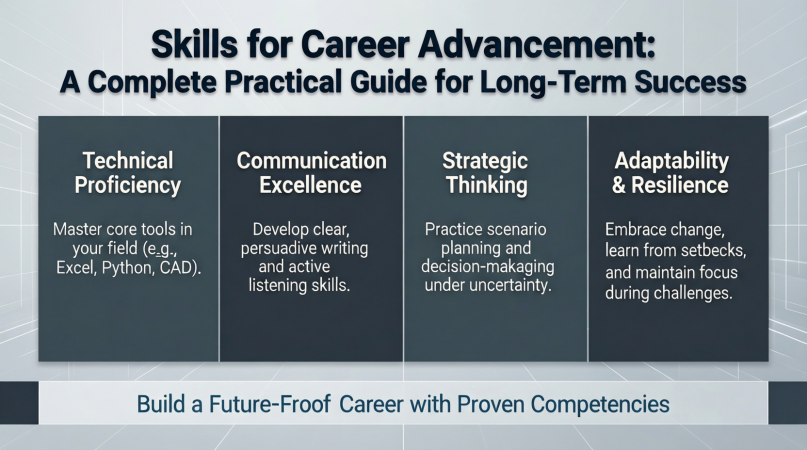
Skills for career advancement refer to a combination of technical skills, soft skills, and personal development abilities that help a person grow professionally. These skills go beyond basic job requirements and focus on long-term success and progression.
Technical skills are job-specific abilities. For example, a digital marketer may need data analysis skills, while a developer may need programming expertise. However, technical skills alone are not enough for growth.
Soft skills play a major role in career progress. These include communication, teamwork, leadership, adaptability, and emotional intelligence. Employers value these because they affect how well you work with others and handle challenges.
Personal development skills support both technical and soft skills. Time management, goal setting, self-discipline, and continuous learning help you stay focused and motivated.
Together, these skills for career advancement help you perform better in your current role and prepare you for future opportunities. They allow you to take initiative, solve problems independently, and add more value to your organization.
Why is Skills for Career Advancement Important?
Skills for career advancement are important because the workplace is constantly changing. New technologies, tools, and business models appear regularly, and professionals must keep up.
First, these skills increase your employability. When you have strong and diverse skills, you become valuable to employers. This makes it easier to find new roles or switch industries if needed.
Second, they support promotions and salary growth. Managers often promote employees who show leadership, communication ability, and problem-solving skills, not just technical knowledge.
Third, skills for career advancement build confidence. When you know you can handle challenges and learn new things, you feel more secure in your role and decisions.
Finally, these skills improve job satisfaction. Growth brings a sense of achievement and purpose. You feel motivated when you see progress in your career.
In simple terms, skills for career advancement help you stay relevant, respected, and ready for future opportunities.
Detailed Step-by-Step Guide
Step 1: Assess Your Current Skills
Start by understanding where you stand. List your technical, soft, and personal skills. Be honest about your strengths and weaknesses.
Ask yourself questions like:
- What tasks do I handle well?
- Where do I struggle?
- What feedback do I often receive?
This self-assessment creates a clear starting point.
Step 2: Set Clear Career Goals
Without goals, skill development becomes confusing. Decide where you want to go in your career.
Your goals may include:
- Getting a promotion
- Changing industries
- Becoming a team leader
- Increasing income
Clear goals help you choose the right skills for career advancement instead of learning randomly.
Step 3: Identify Required Skills
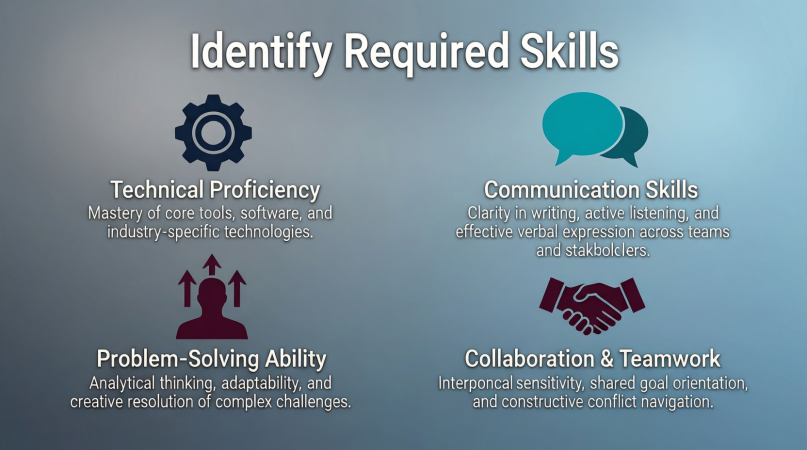
Once your goals are clear, identify the skills needed to reach them. Study job descriptions of your desired role. Notice common requirements.
For example:
- Leadership roles require communication and decision-making skills.
- Technical roles may require advanced tools or certifications.
This step ensures your efforts are focused and effective.
Step 4: Create a Learning Plan
A learning plan keeps you organized and consistent. Break down each skill into smaller tasks.
Your plan may include:
- Online courses
- Practice projects
- Reading books
- Mentorship
Set weekly or monthly targets to track progress.
Step 5: Practice in Real Situations
Learning without practice has limited value. Apply your new skills at work whenever possible.
For example:
- Volunteer for presentations to improve communication
- Lead small tasks to develop leadership
- Suggest improvements to build problem-solving skills
Practical use strengthens confidence and understanding.
Step 6: Seek Feedback and Improve
Feedback helps you grow faster. Ask managers, colleagues, or mentors for constructive feedback.
Listen carefully and avoid becoming defensive. Use feedback to refine your skills and correct mistakes.
Step 7: Review and Update Regularly
Career growth is ongoing. Review your skills every few months. Update goals as your situation changes.
This habit keeps your skills for career advancement aligned with market demands.
Benefits of Skills for Career Advancement
- Better job performance and efficiency
- Higher chances of promotion and salary growth
- Increased confidence and professional self-esteem
- Greater job security in changing markets
- Stronger professional relationships
- Improved problem-solving and decision-making
- More career flexibility and options
Disadvantages / Risks
- Time investment may feel overwhelming
- Learning costs can be high if unmanaged
- Burnout from trying to learn too much at once
- Frustration when progress feels slow
- Risk of focusing on irrelevant skills
These risks can be reduced with planning and balance.
Common Mistakes to Avoid
Many professionals fail to progress because of avoidable mistakes.
One common mistake is learning without clear goals. Random learning wastes time and energy.
Another mistake is ignoring soft skills. Technical expertise alone rarely leads to leadership roles.
Some people also avoid feedback. This slows improvement and limits self-awareness.
Finally, many give up too early. Skills for career advancement require patience and consistency.
Avoiding these mistakes keeps your progress steady and meaningful.
FAQs
What are the most important skills for career advancement?
The most important skills include communication, problem-solving, adaptability, leadership, and continuous learning. Technical skills are also important but depend on your industry.
How long does it take to see career growth after learning new skills?
The timeline varies. Some improvements appear within months, while promotions may take longer. Consistent effort usually brings results over time.
Can skills for career advancement help with career change?
Yes, transferable skills like communication, time management, and critical thinking are useful across industries and support career transitions.
Do I need certifications to advance my career?
Certifications can help but are not always required. Practical skills, experience, and results often matter more.
How can I improve skills while working full-time?
Use small time blocks. Learn during weekends, evenings, or short daily sessions. Apply skills directly at work for faster learning.
Are soft skills more important than technical skills?
Both are important. Technical skills help you perform tasks, while soft skills help you grow into leadership and management roles.
Expert Tips & Bonus Points
Focus on quality over quantity when learning skills. Master a few relevant skills instead of many shallow ones.
Build a habit of daily learning, even if it is only fifteen minutes.
Find a mentor who has achieved what you want. Their guidance can save years of trial and error.
Track your progress in a journal. Writing helps you stay motivated and focused.
Most importantly, stay adaptable. Skills for career advancement change with time, and flexibility keeps you ahead.
Conclusion
Skills for career advancement are not optional in today’s professional world. They are the foundation of long-term growth, stability, and satisfaction. When you invest in the right skills, you take control of your career instead of waiting for opportunities to appear.
This guide showed that career growth is a structured process. It starts with self-awareness, continues with clear goals, and succeeds through consistent learning and practice. Skills for career advancement help you become more confident, capable, and valuable in any workplace.
While challenges and risks exist, they can be managed with planning and balance. Avoid common mistakes, seek feedback, and stay patient with your progress. Growth rarely happens overnight, but steady effort always pays off.
No matter your current position, it is never too early or too late to improve your skills. The sooner you start, the more opportunities you create for yourself. By focusing on skills for career advancement today, you build a stronger, more secure, and more fulfilling professional future for tomorrow.
