

Introduction
Managing your money wisely is crucial in today’s fast-paced world. A well-structured personal finance guide can help you take control of your income, expenses, savings, and investments. Whether you are just starting your financial journey or looking to refine your money habits, understanding the core principles of personal finance is essential. This guide will provide practical steps, tips, and strategies to improve your financial well-being. By following this personal finance guide, you can achieve your financial goals, reduce stress, and build a secure future.
In this article, we will explore what personal finance is, why it matters, step-by-step strategies for managing your money, common pitfalls to avoid, and expert tips to accelerate your financial growth. By the end of this guide, you will have a clear roadmap to manage your money effectively, create a budget, invest wisely, and ensure long-term financial stability. This guide is perfect for beginners and intermediate readers who want actionable advice in simple, easy-to-understand language.
What is Personal Finance?
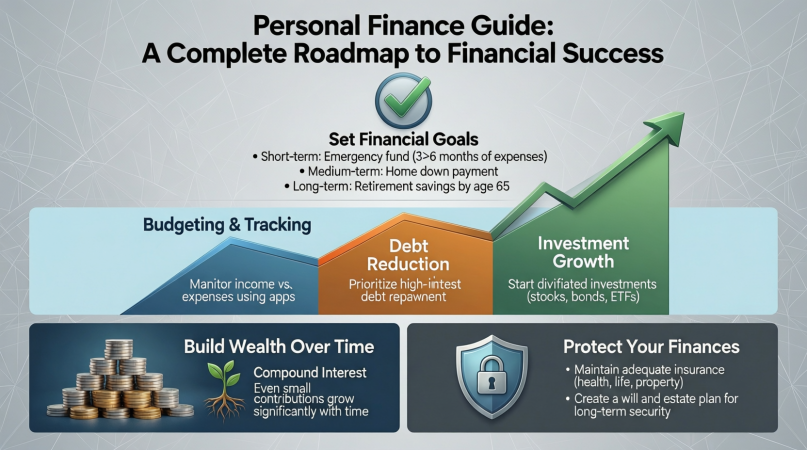
Personal finance refers to managing your money in a way that ensures financial stability and growth. It includes budgeting, saving, investing, managing debt, planning for retirement, and protecting your assets through insurance. Essentially, personal finance is about making informed decisions about how you earn, spend, save, and invest money.
Key components of personal finance include:
- Income Management: Understanding your total earnings and sources of income.
- Budgeting: Planning how to allocate money for expenses, savings, and investments.
- Debt Management: Handling loans, credit cards, and other liabilities responsibly.
- Saving & Emergency Fund: Setting aside money for future needs or unexpected expenses.
- Investing: Growing wealth through stocks, bonds, mutual funds, or other financial instruments.
- Retirement Planning: Ensuring long-term financial security through consistent planning.
- Insurance: Protecting yourself and your family from unforeseen financial risks.
Personal finance is not just about having money; it’s about making your money work for you. When done correctly, it provides freedom, reduces stress, and helps you achieve life goals like buying a house, starting a business, or traveling the world.
Why is Personal Finance Important?
Understanding personal finance is vital for several reasons:
- Financial Security: Proper money management ensures you have funds during emergencies, unexpected expenses, or economic downturns.
- Debt Avoidance: By tracking spending and budgeting, you can prevent unnecessary debt accumulation.
- Achieving Goals: Whether it’s buying a home, paying for education, or retiring comfortably, personal finance helps you plan and achieve your dreams.
- Stress Reduction: Financial uncertainty causes stress. Managing money effectively reduces anxiety and improves mental well-being.
- Wealth Growth: Smart investments and savings allow your money to grow over time, giving you financial independence.
- Better Decision Making: Understanding finances equips you to make informed choices about spending, saving, and investing.
Ignoring personal finance can lead to overspending, high debt, insufficient savings, and missed opportunities. On the other hand, a strong grasp of personal finance provides control, confidence, and a clear path to long-term success.
Detailed Step-by-Step Personal Finance Guide
Managing your money effectively requires a structured approach. Follow these steps to build a solid financial foundation:
Step 1: Assess Your Financial Situation
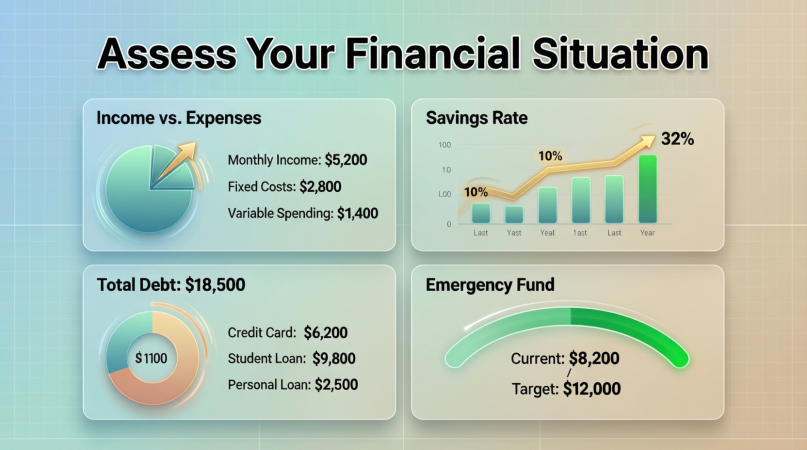
Start by understanding your current financial position:
- List all sources of income.
- Track monthly expenses (fixed and variable).
- Identify debts and liabilities.
- Note existing savings and investments.
Example: If you earn $3,000 per month, track every expense like rent, groceries, transport, subscriptions, and discretionary spending. This step helps you identify areas where you can save.
Step 2: Set Clear Financial Goals
Goals give direction to your personal finance plan. Categorize them as:
- Short-term goals (0–1 year): Emergency fund, paying off credit card debt.
- Medium-term goals (1–5 years): Buying a car, funding a vacation, home renovation.
- Long-term goals (5+ years): Retirement, child’s education, buying a house.
Use SMART goals: Specific, Measurable, Achievable, Relevant, and Time-bound. For instance, “Save $5,000 in 12 months for an emergency fund” is a SMART goal.
Step 3: Create a Budget
Budgeting is the foundation of personal finance. A budget helps you control spending and allocate money efficiently.
Steps to create a budget:
- Calculate monthly income.
- Track all expenses.
- Categorize expenses: needs vs. wants.
- Allocate savings: at least 20% of income if possible.
- Adjust discretionary spending to match financial goals.
Example of a monthly budget (income $3,000):
- Housing: $900
- Food: $450
- Utilities & transport: $300
- Savings: $600
- Debt repayment: $300
- Entertainment & discretionary: $450
Step 4: Build an Emergency Fund
An emergency fund is crucial for financial security. It covers unexpected events like medical emergencies, job loss, or urgent home repairs.
Tips for building an emergency fund:
- Save 3–6 months of living expenses.
- Keep funds in a high-yield savings account.
- Start small: even $50–$100 per month adds up over time.
Example: If monthly expenses are $2,000, aim to save $6,000–$12,000 in your emergency fund.
Step 5: Manage and Reduce Debt
Debt can be a major financial burden if not managed properly. Prioritize paying off high-interest debt like credit cards first.
Debt management strategies:
- Debt snowball method: Pay off smallest debts first to build momentum.
- Debt avalanche method: Pay off debts with the highest interest rates first to save money.
- Consolidate loans if it reduces interest rates.
- Avoid accumulating new debt unless necessary.
Step 6: Save and Invest Wisely
Saving alone is not enough; your money must grow. Investments help you build wealth over time.
Investment options:
- Stocks: High potential returns but higher risk.
- Bonds: Lower risk, steady income.
- Mutual funds: Diversified investment managed by professionals.
- Real estate: Long-term wealth building.
- Retirement accounts (401k, IRA): Tax benefits and long-term growth.
Example: Invest $500 monthly in a diversified portfolio with an average return of 7% per year. Over 20 years, this can grow significantly due to compound interest.
Step 7: Plan for Retirement
Retirement planning ensures financial independence in later years. Start early to maximize growth.
Retirement tips:
- Start with employer-sponsored plans if available.
- Contribute regularly, even small amounts.
- Increase contributions gradually.
- Consider tax-advantaged accounts for long-term growth.
Example: Saving $200 monthly from age 25 with 7% annual return could result in over $150,000 by age 60.
Step 8: Protect Yourself with Insurance
Insurance safeguards your finances against unexpected events:
- Health insurance: Covers medical expenses.
- Life insurance: Provides financial security for dependents.
- Disability insurance: Protects income if you cannot work.
- Property insurance: Safeguards your home and belongings.
Step 9: Track and Review Progress
Regularly reviewing finances ensures you stay on track:
- Monitor spending monthly.
- Reassess goals annually.
- Adjust investments and savings as needed.
- Celebrate milestones to stay motivated.
Benefits of Personal Finance
Managing personal finance effectively brings multiple benefits:
- Financial security and peace of mind.
- Reduced stress and anxiety.
- Ability to achieve short-term and long-term goals.
- Increased savings and investment returns.
- Better control over debt.
- Preparation for emergencies.
- Retirement readiness.
- Freedom to make lifestyle choices.
Disadvantages / Risks
While personal finance management is essential, neglect or mistakes can create risks:
- Overspending: Poor budgeting leads to debt accumulation.
- Inflation risk: Not investing can erode savings over time.
- Poor investment choices: High-risk investments can result in losses.
- Ignoring retirement planning: Late planning reduces future options.
- Lack of insurance: Leaves you vulnerable to financial shocks.
Common Mistakes to Avoid
Even beginners can make critical errors in personal finance. Avoid these common mistakes:
- Not budgeting or tracking expenses.
- Living beyond your means.
- Ignoring debt or paying only minimums.
- Failing to save for emergencies.
- Delaying retirement planning.
- Investing without research or blindly following trends.
- Over-reliance on credit cards.
- Neglecting insurance and risk protection.
FAQs About Personal Finance
1. How much should I save monthly?
Aim to save at least 20% of your income. Prioritize building an emergency fund and then invest for growth.
2. Should I pay off debt or save first?
High-interest debt should be paid off first. For low-interest loans, balance between saving and repayment may work best.
3. What’s the best budgeting method?
Popular methods include the 50/30/20 rule: 50% needs, 30% wants, 20% savings/investments.
4. How do I start investing with little money?
Start small with mutual funds, ETFs, or micro-investing apps. Consistency matters more than initial amount.
5. How much emergency fund do I need?
Ideally, save 3–6 months of essential living expenses. Adjust based on job stability and lifestyle.
6. Is credit card debt always bad?
Not if managed properly. Pay balances in full monthly to avoid interest and build credit history.
7. Can I achieve financial independence without high income?
Yes, by managing expenses, saving consistently, and investing wisely, financial independence is possible at any income level.
8. How often should I review my finances?
Monthly for budgeting and spending, annually for long-term goals, investments, and retirement plans.
9. What’s the role of insurance in personal finance?
Insurance protects against financial shocks, covering health, life, property, and income risks.
10. How can I stay motivated to save?
Set clear goals, track progress, automate savings, and celebrate milestones to stay committed.
Expert Tips & Bonus Points
- Automate savings and bill payments to avoid missed opportunities.
- Use apps or spreadsheets to track income and expenses.
- Negotiate bills and expenses where possible to save money.
- Avoid lifestyle inflation—keep spending steady even if income rises.
- Diversify investments to reduce risk.
- Review subscriptions and eliminate unused services.
- Consider side hustles to increase income.
- Keep learning about personal finance through books, podcasts, or online courses.
- Rebalance investment portfolios annually for optimal growth.
- Teach financial literacy to family members for shared financial wellness.
Conclusion
A personal finance guide is not just about handling money—it’s about building a life of financial freedom, stability, and growth. By understanding your income, expenses, debt, and investment options, you can make informed decisions that lead to long-term success. This guide has outlined practical steps from budgeting and saving to investing and planning for retirement.
Financial well-being requires discipline, patience, and continuous learning. Avoid common mistakes, set clear goals, and review your progress regularly. With consistent effort and smart strategies, you can reduce financial stress, achieve your goals, and create a secure future. Remember, personal finance is a journey, not a destination, and every small step taken today can lead to significant rewards tomorrow. Start today, stay committed, and watch your financial confidence grow.
