

Introduction
Career planning strategies play a powerful role in shaping a stable, satisfying, and successful professional life. Many people start working without a clear plan, hoping things will improve with time. However, without direction, growth often becomes slow or confusing. A well-thought-out career plan helps you understand where you are, where you want to go, and how to get there in a realistic way.
In today’s fast-changing world, careers are no longer linear. Technology, market demands, and personal goals keep evolving. That is why career planning strategies are not just for students or fresh graduates. They are equally important for working professionals who want growth, career changes, or better work-life balance. When you plan properly, you gain confidence and clarity.
Moreover, career planning strategies help you make smarter decisions. Instead of reacting to situations, you start acting with purpose. You learn to choose skills wisely, accept the right opportunities, and avoid unnecessary risks. This approach saves time, energy, and frustration in the long run.
Most importantly, career planning strategies allow you to align your career with your values and strengths. When your work matches your interests, motivation increases naturally. As a result, success feels more meaningful. In this article, you will learn what career planning is, why it matters, and how to apply proven steps to build a strong and flexible career path.
What is Career Planning Strategies?
Career planning strategies refer to a structured approach used to set career goals and identify the steps needed to achieve them. It is a continuous process that helps individuals understand their skills, interests, values, and opportunities. Rather than leaving career growth to chance, these strategies create a clear roadmap.
At its core, career planning involves self-assessment, goal setting, skill development, and regular evaluation. You analyze where you stand today and compare it with where you want to be in the future. Then, you decide what actions are required to bridge that gap.
Career planning strategies are not fixed rules. They can change based on life stages, industry trends, and personal priorities. For example, a student may focus on education and internships, while a professional may focus on leadership skills or career transitions.
In simple terms, career planning strategies help you move forward with intention. They guide you in making informed choices instead of emotional or rushed decisions. Over time, this structured thinking leads to steady progress and greater job satisfaction.
Why is Career Planning Strategies Important?
Career planning strategies are important because they give direction and purpose to your professional life. Without a plan, it is easy to feel lost or stuck in a role that does not support growth. Planning helps you stay focused on long-term goals while managing short-term tasks.
Another key reason is adaptability. Industries change rapidly, and jobs that exist today may disappear tomorrow. Career planning strategies help you prepare for these changes by encouraging continuous learning and flexibility. This preparation reduces fear and uncertainty.
Career planning also improves decision-making. When opportunities arise, you can evaluate them based on your goals instead of short-term benefits. This leads to better choices and fewer regrets.
Additionally, these strategies boost confidence. Knowing your strengths and having a clear plan makes you more confident during interviews, performance reviews, and career discussions. You can explain your goals clearly and professionally.
Finally, career planning strategies support personal fulfillment. When your career aligns with your interests and values, work becomes more meaningful. This balance improves motivation, productivity, and overall well-being.
Detailed Step-by-Step Guide
Step 1: Self-Assessment and Awareness

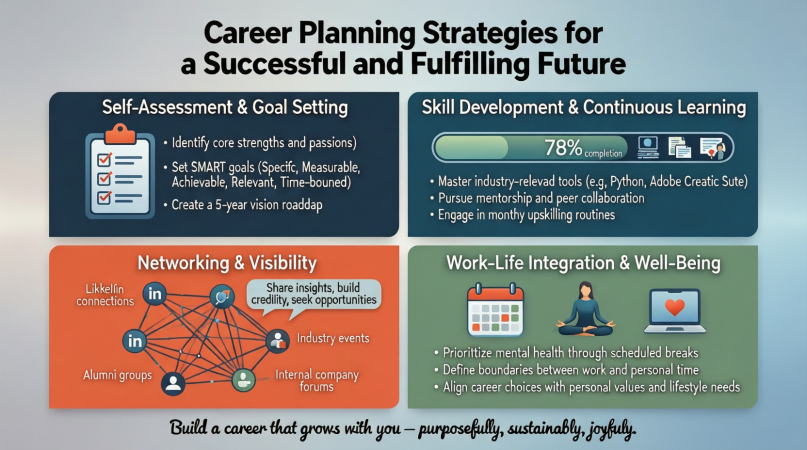
The first step in career planning strategies is understanding yourself. You need to know your strengths, weaknesses, interests, and values.
Start by asking simple questions. What tasks do you enjoy? What skills come naturally to you? What type of work environment suits you best? Honest answers create a strong foundation.
You can also review past experiences. Look at projects where you performed well or felt proud. These moments reveal useful patterns about your abilities and preferences.
Self-awareness helps you choose a career path that fits you instead of following others blindly. This clarity reduces confusion later.
Step 2: Define Clear Career Goals
Once you understand yourself, the next step is setting clear goals. Career planning strategies work best when goals are specific and realistic.
Divide goals into short-term, mid-term, and long-term categories. Short-term goals may include learning a new skill, while long-term goals may involve leadership roles or career changes.
Write your goals down. Clear written goals are easier to track and adjust. Also, make sure your goals are measurable so you can monitor progress.
Having defined goals keeps you motivated and focused even during challenging periods.
Step 3: Research Career Options and Trends
Research is a crucial part of career planning strategies. You must understand the job market, industry trends, and growth opportunities.
Explore different roles related to your interests. Learn about required skills, qualifications, and typical career paths. This knowledge helps you avoid unrealistic expectations.
Pay attention to future trends. Industries like technology, healthcare, and digital marketing are constantly evolving. Staying informed gives you an advantage.
Research allows you to align your goals with real-world opportunities.
Step 4: Skill Development and Learning Plan
After research, identify skill gaps between your current abilities and career goals. Career planning strategies emphasize continuous learning.
Create a learning plan that includes technical skills, soft skills, and practical experience. Focus on communication, problem-solving, and adaptability.
Use learning through practice whenever possible. Real-world experience strengthens understanding and builds confidence.
Skill development should be ongoing. Regular updates keep you competitive and relevant.
Step 5: Create an Action Plan
An action plan turns ideas into reality. Career planning strategies become effective only when supported by action.
Break goals into small steps. Assign timelines to each task to stay organized. For example, set monthly targets for learning or networking.
Track your progress regularly. Reviewing your action plan helps you stay accountable and motivated.
An organized action plan reduces overwhelm and increases consistency.
Step 6: Build a Strong Professional Network
Networking is an important element of career planning strategies. Relationships open doors to opportunities and learning.
Start by connecting with colleagues, mentors, and industry peers. Engage in meaningful conversations rather than focusing only on benefits.
Networking also provides guidance. Experienced professionals can share insights and advice that books cannot offer.
A strong network supports growth and career transitions.
Step 7: Review and Adjust Regularly
Career planning strategies are not one-time tasks. Regular review keeps them relevant.
Life situations and priorities change. Reviewing your plan helps you adjust goals and actions accordingly.
Reflect on what is working and what is not. Make changes without guilt or fear.
Flexibility ensures long-term success and satisfaction.
Benefits of Career Planning Strategies
- Provides clear career direction and focus
- Improves decision-making and confidence
- Encourages continuous learning and growth
- Helps adapt to changing job markets
- Reduces career-related stress and confusion
- Aligns work with personal values and interests
- Increases long-term job satisfaction
Disadvantages / Risks
- Requires time and consistent effort
- Goals may change, causing frustration
- Overplanning can delay action
- Limited information may lead to wrong assumptions
- Fear of failure may slow progress
Common Mistakes to Avoid
One common mistake is skipping self-assessment. Without understanding yourself, career planning strategies lose effectiveness.
Another mistake is setting unrealistic goals. Goals that are too ambitious can cause disappointment and burnout.
Ignoring skill gaps is also risky. Planning without learning leads to stagnation.
Some people avoid reviewing their plans. This creates outdated goals that no longer fit current situations.
Lastly, comparing your journey with others can reduce motivation. Every career path is unique.
FAQs
What are career planning strategies in simple words?
Career planning strategies are steps that help you decide what career you want and how to achieve it. They include goal setting, learning, and regular review.
When should I start career planning?
You can start career planning strategies at any stage. Students, fresh graduates, and professionals can all benefit from planning.
Can career planning strategies change over time?
Yes, they should change. As skills, interests, and industries evolve, updating your plan keeps it effective.
Do career planning strategies guarantee success?
They do not guarantee success, but they increase the chances by providing clarity, preparation, and direction.
How often should I review my career plan?
Review your plan at least once or twice a year. Regular reviews help you stay aligned with goals.
Are career planning strategies useful for career change?
Yes, they are especially helpful for career changes. They help identify transferable skills and realistic transition paths.
Expert Tips & Bonus Points
Focus on progress, not perfection. Small consistent steps create long-term success.
Seek feedback from mentors and peers. External perspectives add value.
Keep learning habits simple and practical. Consistency matters more than speed.
Document achievements regularly. This builds confidence and helps during evaluations.
Stay patient. Career growth takes time and effort.
Conclusion
Career planning strategies are essential tools for building a meaningful and successful professional life. They help you move forward with clarity instead of uncertainty. By understanding yourself, setting clear goals, and taking consistent action, you create a strong foundation for long-term growth.
In a world where careers constantly evolve, planning gives you stability and confidence. It prepares you for changes while keeping your goals aligned with your values. Rather than feeling stuck or overwhelmed, you gain control over your direction.
Career planning strategies also promote continuous learning. They encourage you to improve skills, seek guidance, and adapt when needed. This mindset keeps you relevant and competitive in any industry.
Most importantly, these strategies help you find purpose in your work. When your career supports your interests and strengths, motivation increases naturally. Over time, this leads to satisfaction and balance.
Whether you are just starting or planning a change, career planning strategies can guide you toward a future that feels both successful and fulfilling.
