

Introduction
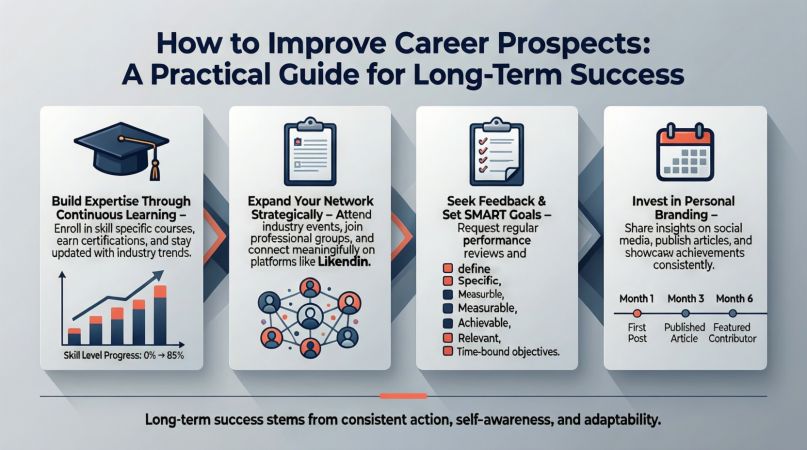
Understanding how to improve career prospects is one of the most important goals for anyone who wants stability, growth, and long-term success. In today’s competitive world, relying only on a degree or job title is no longer enough. Careers change quickly, industries evolve, and new skills are constantly in demand. Because of this, professionals at every level must take responsibility for their own growth.
When you learn how to improve career prospects, you gain control over your professional future. You stop depending on luck and start building skills, habits, and connections that create real opportunities. This approach helps you move forward even during economic uncertainty or job market changes. It also allows you to align your career with your personal goals and values.
Many people feel stuck in roles that no longer challenge them. Others want higher income, better work-life balance, or more meaningful work but do not know where to start. The good news is that improving your career prospects does not require drastic changes overnight. Small, consistent actions can lead to powerful results over time.
This guide is written in simple English for beginners and intermediate readers. It explains what the topic means, why it matters, and how to apply proven strategies step by step. By the end, you will have a clear roadmap to move your career in the direction you want.
What Is How to Improve Career Prospects?
How to improve career prospects refers to the actions, strategies, and habits that increase your chances of professional growth and success. It includes learning new skills, gaining experience, building relationships, and making smart career decisions over time.
Career prospects are not limited to promotions. They also include job security, income potential, career flexibility, and personal satisfaction. Improving them means preparing yourself for better roles, stronger opportunities, and long-term stability.
This process is continuous. It starts with self-awareness and continues through learning, networking, and adapting to change. Anyone can work on improving career prospects, regardless of age, background, or current position.
Why Is How to Improve Career Prospects Important?
Knowing how to improve career prospects is important because the job market is always changing. Skills that were valuable five years ago may not be enough today. Employers now look for adaptable, motivated, and skilled professionals.
Improving your career prospects helps you stay relevant. It increases your confidence and opens doors to better opportunities. It also reduces stress because you feel prepared for changes instead of afraid of them.
When you focus on career improvement, you invest in yourself. This investment pays off through higher income, better roles, and a stronger professional identity. Over time, it creates a career that supports both your professional and personal life.
Detailed Step-by-Step Guide
Step 1: Assess Your Current Situation
Start by understanding where you stand right now. Look at your skills, experience, and achievements honestly.
Ask yourself what you do well and where you struggle. Review your past roles and identify patterns. This clarity helps you decide what to improve and what to build on.
Step 2: Set Clear Career Goals
Clear goals give direction to your efforts. Decide where you want to be in one, three, and five years.
Your goals should be realistic but challenging. Write them down and review them regularly. Clear goals make it easier to choose the right opportunities.
Step 3: Build In-Demand Skills
Learning relevant skills is a core part of how to improve career prospects. Focus on skills that are valuable in your industry.
These may include technical abilities, communication, leadership, or problem-solving. Choose skills that align with your goals and practice them consistently.
Step 4: Gain Practical Experience
Experience strengthens your profile. Look for projects, assignments, or volunteer work that adds value to your resume.
Even small responsibilities can demonstrate growth. Practical experience shows employers that you can apply knowledge in real situations.
Step 5: Improve Communication Skills
Strong communication is essential in every career. Work on speaking clearly, writing professionally, and listening actively.
Good communication builds trust and helps you stand out. It also improves teamwork and leadership potential.
Step 6: Build a Strong Professional Network
Networking plays a major role in improving career prospects. Connect with colleagues, mentors, and industry peers.
Attend events, participate in discussions, and maintain relationships. A strong network provides support, advice, and opportunities.
Step 7: Seek Feedback and Mentorship
Feedback helps you grow faster. Ask trusted people for honest opinions about your performance.
Mentors offer guidance based on experience. Learning from others helps you avoid common mistakes and make better decisions.
Step 8: Stay Updated With Industry Trends
Industries evolve quickly. Stay informed about trends, tools, and changes in your field.
Reading, attending events, and learning continuously keeps you competitive and prepared for future roles.
Step 9: Strengthen Your Personal Brand
Your personal brand reflects how others see you professionally. Be consistent in your work quality, attitude, and values.
A strong brand builds credibility and trust. It makes you memorable and respected in your field.
Step 10: Review and Adjust Regularly
Career growth is not linear. Review your progress regularly and adjust your plan when needed.
Flexibility helps you respond to changes and seize new opportunities without losing focus.
Benefits of How to Improve Career Prospects
- Greater job security and stability
- Higher earning potential over time
- Increased confidence and self-worth
- Access to better opportunities
- Stronger professional relationships
- Improved work satisfaction
- Better adaptability to change
Disadvantages / Risks
- Requires time and consistent effort
- May involve short-term discomfort
- Can feel overwhelming without planning
- Risk of focusing on too many skills at once
- Possible setbacks or slow progress
Common Mistakes to Avoid
Many people make mistakes while trying to improve their careers. One common mistake is waiting too long to take action. Delaying growth can limit opportunities.
Another mistake is chasing trends without a clear plan. Learning random skills without direction wastes time and energy.
Ignoring feedback is also harmful. Feedback provides insight that self-evaluation cannot.
Finally, avoiding networking can slow progress. Relationships often create opportunities that skills alone cannot.
FAQs
What is the first step to improve career prospects?
The first step is self-assessment. Understanding your strengths, weaknesses, and goals helps you create a focused improvement plan.
How long does it take to see results?
Results vary depending on effort and consistency. Small improvements may appear in months, while major growth can take years.
Do I need to change jobs to improve career prospects?
Not always. Many improvements happen within the same role through learning, projects, and responsibility growth.
Are soft skills really important?
Yes, soft skills like communication and teamwork are essential. They support technical skills and improve overall performance.
Can career prospects improve at any age?
Yes, career improvement is possible at any stage. Lifelong learning and adaptability make growth achievable for everyone.
How often should I update my career plan?
Review your plan every six months or when major changes occur. Regular updates keep your goals relevant.
Expert Tips & Bonus Points
Focus on consistency rather than speed. Small daily actions create lasting results.
Document your achievements regularly. This habit helps during reviews and job opportunities.
Invest in learning, even when it feels uncomfortable. Growth often happens outside comfort zones.
Balance ambition with patience. Sustainable progress leads to stronger career outcomes.
Conclusion
Learning how to improve career prospects is a lifelong journey that requires intention, effort, and adaptability. Careers are no longer fixed paths. They are flexible journeys shaped by the choices you make every day. By understanding your goals, building relevant skills, and staying open to learning, you create opportunities instead of waiting for them.
Improving career prospects is not about competing with others. It is about becoming better than your past self. When you focus on growth, you build confidence and resilience. These qualities help you handle challenges and changes with clarity.
The steps shared in this guide are practical and achievable. They do not require perfection or dramatic changes. Instead, they encourage steady improvement and thoughtful decisions. Over time, these actions lead to meaningful progress.
Remember that career success looks different for everyone. Define what success means to you and align your efforts with that vision. With patience, consistency, and the right mindset, you can create a career that supports both your professional ambitions and personal well-being.
