

Introduction
Finding a job is exciting, but the interview stage often feels stressful. Many candidates worry about what to say, how to behave, or how to impress the interviewer. This is where clear and practical job interview advice becomes extremely valuable. With the right preparation, anyone can walk into an interview feeling confident and ready.
Job interview advice is not only for fresh graduates. It also helps experienced professionals who want to change roles, industries, or career paths. Interviews are not just about answering questions. They are about communication, confidence, and showing that you are the right fit for the role and the company.
In today’s competitive job market, even well-qualified candidates can fail if they are not prepared. Employers look for skills, attitude, and cultural fit. A small mistake, such as poor body language or unclear answers, can reduce your chances. On the other hand, good preparation can help you stand out from other applicants.
This guide is written in simple English for beginners and intermediate readers. It covers everything from basic concepts to advanced tips. You will learn what interviews are, why they matter, and how to prepare step by step. By the end, you will have practical job interview advice you can apply immediately to improve your performance and confidence.
What is Job Interview Advice?
Job interview advice refers to practical guidance that helps candidates prepare for and succeed in job interviews. It includes tips on communication, behavior, preparation, and follow-up actions.
This advice covers different interview stages, such as phone interviews, video interviews, and face-to-face meetings. It also helps candidates understand what employers expect and how to respond effectively.
Good job interview advice focuses on both technical and soft skills. Technical skills show that you can do the job. Soft skills, such as communication and teamwork, show how you will work with others.
In simple terms, job interview advice helps you present your best version during an interview. It prepares you to answer questions clearly, stay calm under pressure, and leave a positive impression.
Why is Job Interview Advice Important?
Job interview advice is important because interviews often decide your career direction. A single interview can open doors to new opportunities or close them.
Many candidates have the right qualifications but fail to explain them well. Interview advice helps you structure your answers and highlight your strengths.
It also reduces anxiety. When you know what to expect, you feel more confident and relaxed. Confidence helps you think clearly and respond naturally.
Another reason is competition. Employers often interview many candidates for one role. Job interview advice helps you stand out by avoiding common mistakes and showing professionalism.
Finally, interviews are a two-way process. You are also evaluating the company. Good advice helps you ask smart questions and decide if the job suits your goals.
Detailed Step-by-Step Guide
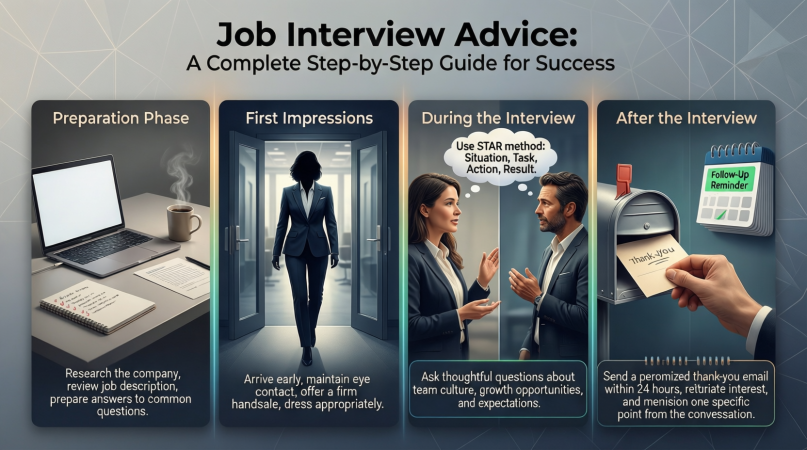
Step 1: Research the Company
Before the interview, learn about the company’s mission, values, and products. Understand their industry and competitors.
This knowledge helps you tailor your answers. It also shows the interviewer that you are genuinely interested.
For example, if the company values innovation, you can mention how you enjoy creative problem-solving.
Step 2: Understand the Job Description
Read the job description carefully. Identify the required skills and responsibilities.
Match your experience with these requirements. Prepare examples that show how you meet them.
This step helps you stay focused during the interview and answer questions confidently.
Step 3: Prepare Common Interview Questions
Most interviews include common questions like “Tell me about yourself” or “What are your strengths?”
Practice clear and honest answers. Keep them short but meaningful.
Use real examples from your experience to support your points.
Step 4: Practice Your Communication Skills
Good communication is essential. Practice speaking clearly and calmly.
Pay attention to your tone and pace. Avoid speaking too fast or too softly.
You can practice with a friend or in front of a mirror to improve confidence.
Step 5: Dress Appropriately
Your appearance creates a first impression. Choose professional and clean clothing.
The dress code may vary by industry, but it is better to be slightly formal than too casual.
Neat grooming also shows respect for the interviewer and the opportunity.
Step 6: Prepare Your Documents
Carry copies of your resume, certificates, and portfolio if needed.
Organize them neatly in a folder. This shows preparation and professionalism.
Having documents ready also reduces stress during the interview.
Step 7: Arrive on Time
Punctuality is critical. Arrive at least ten minutes early.
Being late creates a negative impression and shows poor time management.
If the interview is online, test your internet connection and device beforehand.
Step 8: Show Positive Body Language
Body language speaks louder than words. Sit straight and maintain eye contact.
Smile naturally and avoid crossing your arms.
Positive body language shows confidence and interest.
Step 9: Answer Questions Strategically
Listen carefully before answering. Take a moment to think if needed.
Structure your answers with a clear beginning, middle, and end.
Avoid negative comments about past employers or colleagues.
Step 10: Ask Smart Questions
At the end, interviewers often ask if you have questions. Always say yes.
Ask about team culture, growth opportunities, or expectations.
This shows curiosity and long-term interest.
Step 11: Close the Interview Professionally
Thank the interviewer for their time. Express your interest in the role.
A polite closing leaves a positive final impression.
Remember, the interview experience matters as much as your answers.
Benefits of Job Interview Advice
- Improves confidence and reduces nervousness
- Helps you communicate skills clearly
- Increases chances of job selection
- Prepares you for different interview formats
- Helps you avoid common mistakes
- Builds long-term career skills
Disadvantages / Risks
- Over-preparation can sound rehearsed
- Generic advice may not fit every role
- Following advice blindly can reduce authenticity
- Too much focus on technique may increase pressure
Common Mistakes to Avoid
Many candidates make avoidable mistakes despite good qualifications.
One common mistake is not researching the company. This shows lack of interest.
Another mistake is giving vague answers. Interviewers prefer specific examples.
Poor body language, such as avoiding eye contact, can reduce trust.
Talking negatively about past jobs creates a bad impression.
Finally, failing to ask questions can make you seem uninterested.
FAQs
What is the best way to prepare for an interview?
The best way is to research the company, understand the job role, and practice common questions. Preparation builds confidence and clarity.
How early should I arrive for an interview?
You should arrive ten to fifteen minutes early. This shows punctuality and allows you to relax before starting.
What should I do if I feel nervous?
Take deep breaths and focus on listening carefully. Remember that interviews are conversations, not exams.
How long should my answers be?
Answers should be clear and concise. Aim for one to two minutes unless the question requires detail.
Is it okay to say I do not know an answer?
Yes, honesty is better than guessing. You can say you are willing to learn or explain how you would find the answer.
How important is follow-up after an interview?
Follow-up is important. A short thank-you message shows professionalism and appreciation.
Expert Tips & Bonus Points
Customize your answers for each interview instead of using the same responses.
Use the STAR method to structure answers with situations and results.
Listen actively and respond thoughtfully instead of rushing.
Stay honest about your skills and experience.
Practice mock interviews to improve confidence.
Keep learning from each interview experience, successful or not.
Conclusion
Job interviews can feel challenging, but they are manageable with the right approach. Good preparation, clear communication, and positive behavior can significantly improve your chances. Job interview advice helps you understand what employers expect and how to present yourself effectively.
Remember that interviews are not about perfection. They are about showing your skills, attitude, and willingness to grow. Even experienced professionals continue to learn from each interview. Every experience builds confidence and improves performance over time.
By following the steps in this guide, you can reduce stress and increase clarity. Research, practice, and self-awareness are key elements of success. Small details, such as punctuality and body language, also make a big difference.
Most importantly, stay authentic. Employers value honesty and enthusiasm. Use job interview advice as a guide, not a script. When you combine preparation with your natural personality, you create a strong and memorable impression. With consistent effort and learning, you can approach any interview with confidence and purpose.
