

Introduction
Personal finance basics are the foundation of a stable and stress-free life. Whether you are a student, a salaried employee, or someone running a small business, understanding how money works is essential. Many people earn well but still struggle financially because they never learned how to manage their income properly. This is where personal finance basics play a powerful role.
In simple terms, personal finance is about how you earn, spend, save, invest, and protect your money. It helps you make smart decisions today while preparing for tomorrow. When you understand the basics, you gain control over your finances instead of letting money control you. This control reduces stress and builds confidence.
For beginners, personal finance basics may seem confusing at first. Words like budgeting, investing, and credit scores can feel overwhelming. However, once these concepts are broken down into simple steps, they become easy to follow. Even intermediate readers can benefit by strengthening their habits and correcting past mistakes.
This guide is written in clear and simple English. It focuses on practical steps you can apply in real life. You will learn how to manage money wisely, avoid common traps, and build long-term financial security. By the end of this article, personal finance basics will no longer feel complicated. Instead, they will feel like a useful life skill you can rely on every day.
What is Personal Finance Basics?
Personal finance basics refer to the fundamental principles of managing your money effectively. They cover how you earn income, plan expenses, save for future needs, invest for growth, and protect yourself from financial risks.
At its core, personal finance is about decision-making. Every choice you make with money, whether small or large, affects your financial health. Buying groceries, paying bills, saving for emergencies, or planning retirement are all part of personal finance basics.
These basics usually include budgeting, saving, debt management, investing, insurance, and financial goal setting. Each area connects with the others. For example, without a budget, saving becomes difficult. Without savings, investing feels risky.
Personal finance basics are not about becoming rich overnight. Instead, they focus on building stability and consistency. They help you live within your means, avoid unnecessary debt, and prepare for unexpected situations.
Anyone can learn personal finance basics regardless of income level. The goal is not how much money you make, but how well you manage what you have. With the right knowledge and habits, even small incomes can grow into strong financial foundations over time.
Why is Personal Finance Basics Important?
Personal finance basics are important because money affects almost every area of life. When finances are poorly managed, stress increases and opportunities decrease. On the other hand, good financial habits create freedom and peace of mind.
One key reason personal finance basics matter is financial security. Emergencies such as medical expenses or job loss can happen anytime. Without savings or planning, these situations become overwhelming.
Another reason is independence. When you manage money well, you rely less on others. You can make choices based on goals instead of pressure. This independence improves confidence and self-respect.
Personal finance basics also support long-term goals. Buying a home, starting a business, or retiring comfortably all require planning. Without basic knowledge, these goals remain dreams rather than achievable plans.
Finally, understanding personal finance basics helps avoid debt traps. Many people struggle with high-interest loans and credit misuse. Proper knowledge teaches you when to borrow and when to avoid it.
In short, personal finance basics are not optional. They are essential life skills that protect your present and secure your future.
Detailed Step-by-Step Guide
Step 1: Understand Your Income
The first step in personal finance basics is knowing how much money you earn. This includes salary, business income, freelance work, or any side earnings.
Write down your total monthly income after taxes. This clear number helps you plan realistically. Without knowing income, budgeting becomes guesswork.
Also, understand income stability. Fixed income is easier to plan than irregular income. If your income changes monthly, calculate an average to stay balanced.
Step 2: Create a Simple Budget
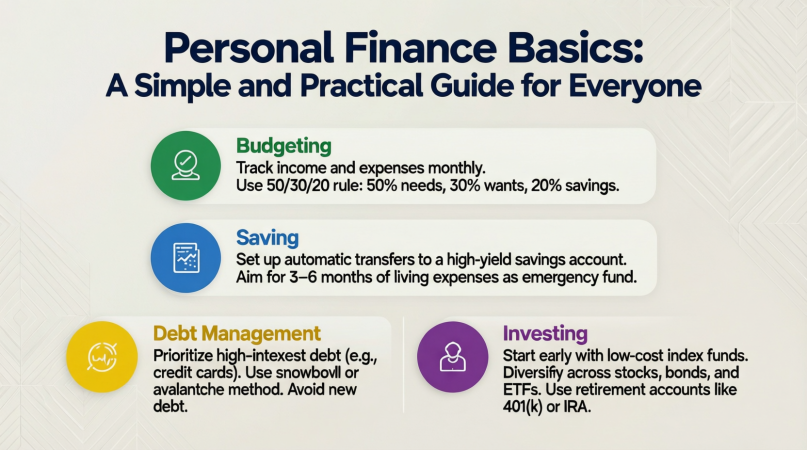
Budgeting is the heart of personal finance basics. A budget is a plan for how you will use your money.
Start by listing essential expenses like rent, food, utilities, and transport. Then add variable expenses such as entertainment or shopping.
A popular method is the 50-30-20 rule. Spend 50 percent on needs, 30 percent on wants, and save 20 percent. Adjust based on your situation.
Review your budget monthly. This habit keeps you aware and prevents overspending.
Step 3: Build an Emergency Fund
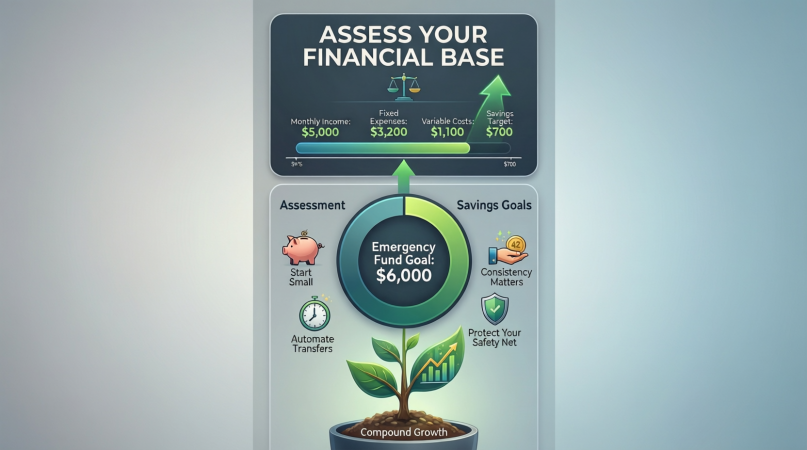
An emergency fund is money set aside for unexpected expenses. Personal finance basics strongly emphasize this step.
Aim to save three to six months of living expenses. Start small if needed. Even saving a little regularly builds discipline.
Keep this money separate from daily spending. It should be easy to access but not tempting to use casually.
Step 4: Manage and Reduce Debt
Debt management is a key part of personal finance basics. Not all debt is bad, but high-interest debt can damage your finances.
List all debts with interest rates. Focus on paying high-interest debts first. This approach saves money in the long run.
Avoid taking new debt unless necessary. Learn to distinguish between needs and wants before borrowing.
Step 5: Start Saving Regularly
Saving is not about leftover money. Personal finance basics recommend saving first.
Automate savings if possible. Treat it like a fixed expense. This habit ensures consistency.
Set short-term and long-term savings goals. Examples include travel, education, or retirement.
Step 6: Learn Basic Investing
Investing helps money grow over time. Personal finance basics introduce investing after savings are stable.
Start with simple options you understand. Focus on long-term growth rather than quick profits.
Diversification is important. Never put all money in one place. This reduces risk and improves stability.
Step 7: Protect Yourself with Insurance
Insurance protects against major financial losses. Health, life, and property insurance are common examples.
Choose coverage based on needs, not fear. Proper insurance is part of responsible personal finance basics.
Review policies regularly to ensure they still fit your life situation.
Benefits of Personal Finance Basics
- Better control over income and expenses
- Reduced financial stress and anxiety
- Improved saving and investing habits
- Stronger preparation for emergencies
- Clear path toward long-term goals
- Increased confidence in money decisions
- Less reliance on debt and loans
Disadvantages / Risks
- Requires discipline and consistency
- Poor planning can lead to frustration
- Incorrect investing knowledge may cause losses
- Over-budgeting can reduce flexibility
- Ignoring inflation may reduce savings value
Common Mistakes to Avoid
Many people fail at personal finance basics due to avoidable mistakes. One common error is not tracking expenses. Without tracking, money leaks go unnoticed.
Another mistake is delaying savings. Waiting for a higher income often leads to missed opportunities. Start saving early, even in small amounts.
Overspending on lifestyle upgrades is also risky. Increasing expenses with income growth can cancel financial progress.
Ignoring debt interest rates is another issue. High interest silently drains money over time.
Finally, lack of patience causes poor decisions. Personal finance basics require time and steady effort, not quick fixes.
FAQs
What are personal finance basics for beginners?
Personal finance basics for beginners include budgeting, saving, debt management, and understanding income. These fundamentals help build strong financial habits early.
How much should I save each month?
A common recommendation is saving at least 20 percent of income. However, any amount saved consistently is better than nothing.
Is budgeting necessary for everyone?
Yes, budgeting helps track spending and plan expenses. It is a core part of personal finance basics for all income levels.
When should I start investing?
Start investing after building an emergency fund and clearing high-interest debt. This order reduces risk and stress.
How can I reduce financial stress?
Following personal finance basics like budgeting, saving, and planning reduces uncertainty and improves confidence.
Can personal finance basics help with low income?
Yes, personal finance basics focus on managing available money wisely. Good habits matter more than income size.
Expert Tips & Bonus Points
Start small and stay consistent. Simple actions done regularly create strong results over time.
Review finances monthly. Regular reviews help catch problems early and adjust goals.
Separate needs from wants. This clarity improves budgeting decisions.
Increase financial knowledge gradually. Learning one concept at a time prevents overload.
Set realistic goals. Achievable targets keep motivation high and prevent burnout.
Conclusion
Personal finance basics are essential tools for building a stable and secure future. They are not reserved for experts or wealthy individuals. Anyone willing to learn and apply simple principles can improve their financial life. By understanding income, controlling expenses, saving regularly, and managing debt, you create a strong foundation.
This guide showed that personal finance basics are practical and achievable. You do not need complex strategies or large sums of money to start. Small steps taken consistently lead to meaningful progress. Over time, these habits reduce stress and increase freedom.
Financial success is not about perfection. Mistakes will happen, and adjustments will be needed. What matters is commitment and awareness. When you take responsibility for your money, you take control of your future.
As you apply these principles, remember that personal finance basics are a lifelong journey. Needs and goals change, but strong fundamentals remain useful. Stay patient, stay informed, and keep moving forward. With the right mindset and habits, financial stability becomes a reality, not just a goal.
